Porsche Appraisal Guide: What Your Air-Cooled 356, 912, or 911 Is Actually Worth
Air-cooled Porsche values have appreciated faster than almost any other collector car segment over the past decade. A 1973 911 Carrera RS that sold for $80,000 in 2010 is worth $500,000 today. Here is what drives air-cooled Porsche value, what appraisers verify, and why the documentation requirements are different from American muscle.
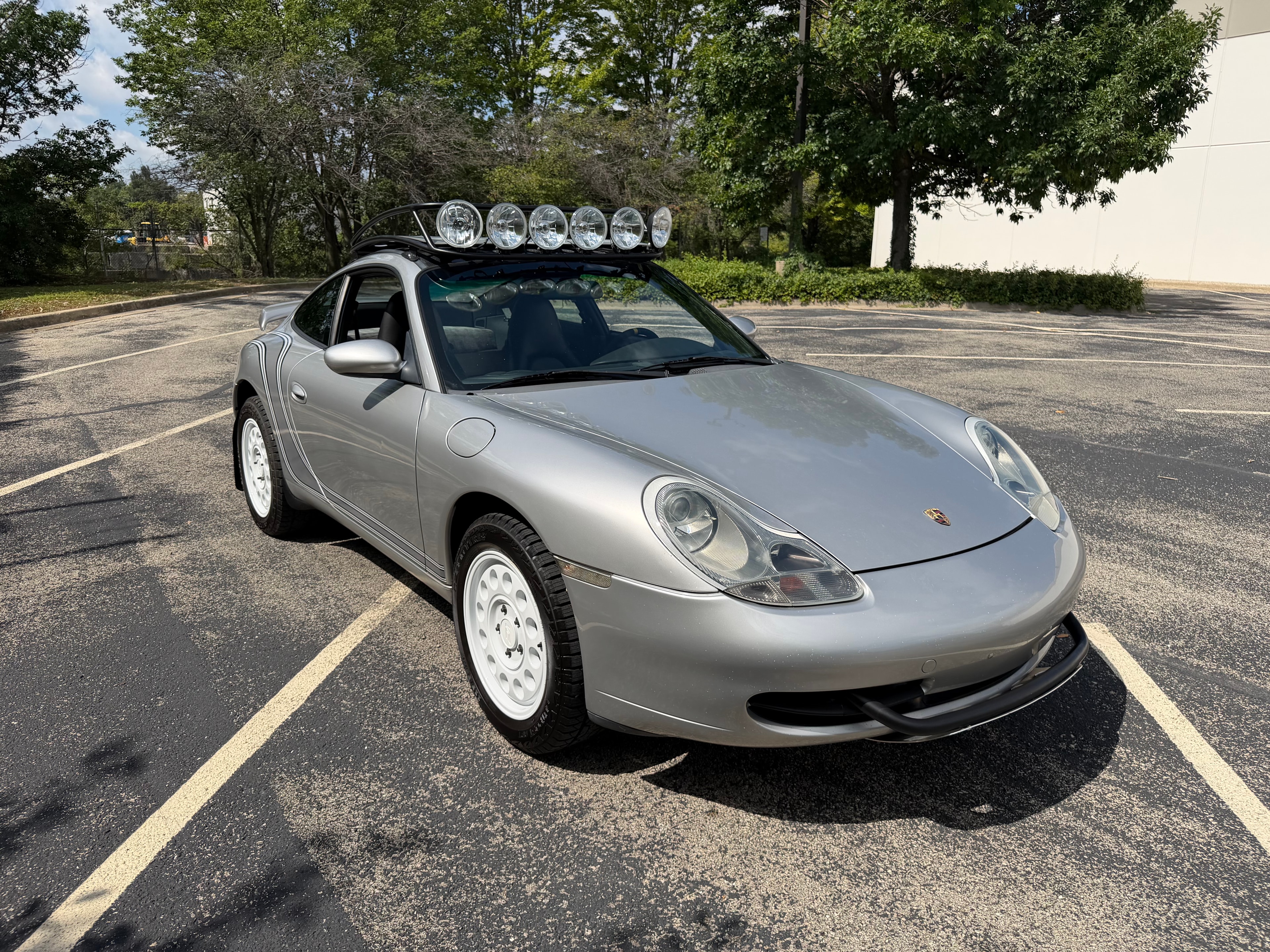
Air-cooled Porsches have appreciated faster than almost any other collector car segment over the past fifteen years. A 1973 911 Carrera RS that sold for $80,000 in 2010 is worth $500,000 today. A 1967 911 S that was a $40,000 car in 2008 is a $150,000 car now. Even the 912 — long dismissed as the poor man's 911 — has found a serious collector following.
That appreciation creates both opportunity and risk. It creates opportunity because owners who bought at the right time are sitting on significant gains. It creates risk because the values are high enough to attract misrepresentation, and the documentation requirements for air-cooled Porsches are different from American muscle in ways that catch buyers and sellers off guard.
Here is what drives air-cooled Porsche value, what appraisers look for, and why a certified appraisal matters more on a Porsche than on almost any other collector car.
Why air-cooled Porsches are different to appraise
Three things make air-cooled Porsches uniquely complex to value:
Matching numbers means something different. On an American muscle car, "numbers matching" primarily means the engine block casting number and suffix code match the car's build date. On a Porsche, the engine and transmission each have their own serial numbers that are recorded on the title in many European countries and tracked in the Porsche factory records. A non-matching engine on a 911 S is not just a value deduction — it can affect the car's ability to be registered in certain markets and its eligibility for certain concours events.
The Porsche Certificate of Authenticity. Porsche AG maintains factory records for every car built and will issue a Certificate of Authenticity (CoA) that confirms the car's original specifications — engine number, transmission number, paint code, interior, and options. For any air-cooled Porsche worth more than $50,000, a CoA is standard documentation. An appraiser who doesn't reference the CoA is missing a critical piece of the picture.
Rust and structural integrity. Air-cooled Porsches rust in specific, predictable locations — the battery box, the front trunk floor, the heater channels, the rear wheel arches, and the torsion bar tubes. A cosmetically clean car can have serious structural rust that isn't visible without a lift inspection. Our pre-purchase inspections specifically check these areas. For an online appraisal, undercarriage photos are essential.
356 (1948–1965): The original
The 356 is the car that established Porsche as a manufacturer. Values have been strong for decades and continue to appreciate, particularly for the performance variants and the cabriolets.
356 A (1955–1959): The first 356 with a windshield that wraps around the corners. The Speedster body style — low windshield, removable side curtains, spartan interior — is the most desirable 356 variant. A documented, rust-free Speedster is a $150,000–$300,000 car depending on condition and history. Speedster replicas built on coupe bodies are common — verify the body style via the CoA.
356 B (1959–1963): The B series introduced the raised headlights and the more powerful Super 90 engine. The Roadster body style (built by D'Ieteren in Belgium) is rare and valuable.
356 C (1963–1965): The final 356, with disc brakes all around. The SC engine (95 hp) is the most powerful 356 engine and the most desirable for driving. The C is the most usable 356 for regular driving.
Carrera engines: Any 356 with a Carrera four-cam engine (the 1500 GS, 1600 GS, or 2000 GS) is in a different value category entirely. These engines were hand-built, expensive when new, and extraordinarily rare today. A 356 Carrera with a documented matching Carrera engine is a $300,000–$600,000 car. Verify the engine number against the CoA — Carrera engines were frequently replaced with pushrod units when they needed expensive rebuilds.
What to document: Porsche CoA. Engine and transmission numbers matching the CoA. Undercarriage photos showing battery box, front trunk floor, and heater channels. Any Porsche Club of America (PCA) or Porsche Parade concours history.
912 (1965–1969, 1976): The underrated one
The 912 was introduced as an entry-level alternative to the 911 — same body, same chassis, four-cylinder engine from the 356 instead of the 911's flat-six. It was dismissed for decades as the poor man's 911.
That dismissal is over. The 912 has found a serious collector following for several reasons: it's lighter than the 911, it handles better at the limit because of the weight distribution, and it's significantly more affordable than a comparable 911. Values have been rising steadily.
1965–1969 912: The original 912. Values range from $30,000 for a driver-quality car to $80,000+ for a concours-correct example with documented history. The 1969 is the last year of the original 912 and commands a slight premium.
1976 912E: Porsche briefly revived the 912 designation for the US market in 1976, using the 2.0-liter fuel-injected engine from the VW/Porsche 914. The 912E is a transitional car — not as desirable as the original 912 but historically interesting as a one-year model.
What to document: CoA confirming 912 production (not a 911 with a 912 engine installed — this was done). Engine number matching CoA. Undercarriage condition.
911 (1964–1989, air-cooled): The core of the market
The 911 is the most important collector car of the second half of the twentieth century. The air-cooled cars — from the 1964 prototype to the last 964 in 1994 — are the ones the market cares about most.
Early 911 (1964–1973): The long-hood cars
The original long-hood 911s are the most historically significant and, for the right variants, the most valuable non-RS air-cooled cars.
1964–1967 911: The earliest production 911s. The 1964–1967 cars have the longest hood, the most delicate styling, and the most original character. Values range from $80,000 for a driver-quality car to $200,000+ for a concours-correct early car with CoA documentation.
911 S (1967–1973): The S designation indicated the higher-output engine — 160 hp in 1967, rising to 190 hp by 1973. The S is the most desirable non-RS long-hood 911. A documented, numbers-matching 1967 911 S is a $150,000–$250,000 car.
911 E and 911 T: The E (Einspritzung, fuel injection) and T (Touring, base) fill out the range below the S. The E is a solid driver car; the T is the entry point.
1973 911 Carrera RS: The most important air-cooled 911 ever built. The RS (Rennsport) was a homologation special — Porsche needed to build 500 to qualify for GT racing. They built 1,580. The lightweight RS Touring is the most desirable; the RS Sport (stripped, no rear seat) is rarer and more valuable. A documented RS is a $400,000–$700,000 car. Fakes exist — the RS has been cloned more than any other 911. CoA verification is non-negotiable.
911 G-series (1974–1989): The impact-bumper cars
The 1974 model year brought the impact bumpers required by US safety regulations, ending the long-hood era. Values are lower than the long-hood cars but rising, particularly for the performance variants.
1974–1977 Carrera: The Carrera name returned on the G-series as the top-of-the-line naturally aspirated 911. The 2.7-liter MFI engine is one of the most characterful Porsche engines ever built — and one of the most fragile. Engine condition and rebuild history are critical on any 2.7 MFI car.
930 Turbo (1976–1989): The 930 is the most dramatic air-cooled 911. The turbocharged 3.0-liter (later 3.3-liter) engine produces massive power with a turbo lag that earned the car its "widowmaker" reputation. Values have been rising sharply. A clean, documented 930 is a $150,000–$300,000 car depending on year and condition.
1984–1989 Carrera 3.2: The 3.2 Carrera is the most usable and reliable of the air-cooled 911s. The 3.2-liter engine is robust, parts are available, and the cars are practical for regular driving. Values are strong and rising. The Carrera Sport (M491 option) and the Carrera Club Sport are the variants worth noting.
1989 Speedster: The G-series Speedster is a one-year model with a dramatically raked windshield and a fiberglass cover over the rear seats. Only 2,104 were built for the US market. Values are strong — a documented Speedster is a $100,000–$150,000 car.
What to document for all G-series: CoA. Engine and transmission numbers. For 930s, turbo rebuild history. For 2.7 MFI cars, engine rebuild documentation. Undercarriage photos.
964 (1989–1994): The transition car
The 964 was the first major redesign of the 911 since 1963 — coil springs replaced the torsion bars, power steering was added, and the body was updated. Values are lower than the G-series for most variants, with exceptions.
964 Carrera RS (1992): The lightweight homologation special. Only 2,000 were built. Values have been rising sharply — a documented RS is a $200,000–$350,000 car.
964 Turbo (1991–1994): The 964 Turbo with the 3.3-liter engine is a strong performer and a legitimate collector car. The 3.6-liter Turbo S (1993) is the rarest and most valuable.
964 Speedster (1993): The second Speedster, built in very limited numbers. A documented Speedster is a $150,000–$200,000 car.
Getting your Porsche appraised
Air-cooled Porsche appraisals require specific knowledge — the CoA verification process, the engine number cross-reference, the rust inspection protocol, and the generation-specific value drivers are not things a generalist appraiser handles well.
Our certified Porsche appraisals start at $149 for the online version. Submit photos — including undercarriage shots, engine bay with the engine number visible, and the CoA if you have it — and we return a signed certified appraisal the same day.
For high-value air-cooled cars (Carrera RS, 930, early S cars), we strongly recommend the in-person inspection. The difference between a car that photographs well and a car that is actually what it's represented to be is often only visible on a lift.
Start your Porsche appraisal — $149 — same-day delivery, all 50 states.
See a sample appraisal report before you order.
Explore Topics
Written by
Shawn Owens, ASCAA-CERT-4246
Content creator and writer sharing insights and stories.


