1969 Camaro Appraisal Guide: SS, COPO, RS, Z/28 & Convertible Values
The 1969 Camaro is the most collected first-generation model — and the most cloned. A base V8 and a COPO 427 can look identical in a photo and differ by $150,000 in value. Here is what every configuration is actually worth and what a certified appraisal verifies.

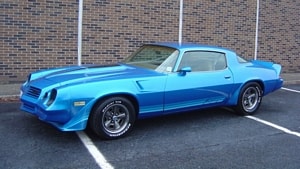
The 1969 Camaro is the most collected first-generation model ever built, and it is also the most misrepresented. Chevrolet produced over 243,000 of them that year across a staggering range of configurations — from a base 250 cubic inch six-cylinder to a COPO 427 that could run the quarter mile in the low 11s. A base V8 coupe with SS stripes and a replacement engine can look identical to a genuine numbers-matching SS 396 in a classified photo. The value difference can be $60,000 or more.
Getting a 1969 Camaro appraised correctly means understanding what every configuration is actually worth, what the documentation proves, and what a certified appraiser looks for beyond the cosmetics.
Why 1969 Is the Most Valuable First-Gen Year
The 1969 Camaro holds a special place in the collector market for several reasons that go beyond nostalgia.
It was the last of the original body style. Chevrolet redesigned the Camaro for 1970, and the first-gen body ran only through 1969. That makes 1969 the final expression of the original design — and the most refined version of it, with a restyled front end, revised interior, and the widest option availability of any first-gen year.
The performance options were at their peak. By 1969, Chevrolet had refined the Camaro's performance lineup to its highest point. The L78 396 at 375 horsepower, the COPO 427 options, the Z/28's DZ 302, and the full SS package were all available simultaneously. No other year offered this breadth of factory performance.
Production numbers create scarcity where it matters. While total 1969 production was high, the desirable configurations — COPO cars, Z/28s, convertibles, and documented SS 396 L78 cars — were built in relatively small numbers. That combination of high demand and genuine scarcity drives values.
The 1969 Camaro Configuration Hierarchy
Not all 1969 Camaros are created equal. Here is how the market values each configuration, from most to least desirable.
COPO 427: The Top of the Market
The Central Office Production Order cars are the most valuable 1969 Camaros in existence. Two COPO options are relevant:
COPO 9561 — L72 427/425 hp. This is the iron-block 427 with solid lifters, rated at 425 horsepower. Chevrolet would not install the 427 in a Camaro through normal ordering channels because it exceeded the corporate displacement limit for intermediate and pony cars. The COPO system bypassed that restriction. Documented COPO 9561 cars with matching numbers and provenance regularly sell for $150,000 to $250,000 or more at major auctions.
COPO 9560 — ZL1 427/430 hp. The aluminum-block ZL1 is the rarest and most valuable production Camaro ever built. Only 69 were produced. A documented, numbers-matching ZL1 is a seven-figure car. Values have exceeded $1,000,000 at auction for exceptional examples.
What makes COPO verification critical: COPO cars were not documented on the standard trim tag the way regular options were. Verification requires the broadcast sheet, dealer records, and engine suffix code analysis. The partial VIN stamp on the engine block is the primary authentication point. A car falsely represented as a COPO — even unintentionally — is worth a fraction of the genuine article.
Z/28: The Racing Homologation Car
The Z/28 package was built to homologate the DZ 302 small-block for SCCA Trans-Am racing. Chevrolet produced 20,302 of them in 1969 — a number that sounds substantial until you consider how many thousands of base Camaros have been converted to Z/28 appearance since then.
A genuine, numbers-matching 1969 Z/28 with documented provenance typically sells for $80,000 to $150,000 depending on condition, color, and options. A well-executed clone might bring $25,000 to $40,000. The gap is real and the verification process is specific — the DZ 302 block casting number, the partial VIN stamp, and the cowl tag RPO content are the three primary authentication points.
The Z/28 was not available with air conditioning or an automatic transmission. Any car presented as a Z/28 with either of those features is either a clone or a heavily modified original — both of which affect value significantly.
SS 396: The Volume Performance Car
The Super Sport package with the 396 big-block is the most common high-performance 1969 Camaro configuration, and it covers a wide value range depending on which 396 is under the hood.
L35 — 325 hp: The base 396 with hydraulic lifters. Solid performance, but the least desirable of the 396 options. A numbers-matching L35 SS in good condition typically brings $35,000 to $55,000.
L34 — 350 hp: The mid-range 396 with a slightly hotter cam and higher compression. Values run $40,000 to $65,000 for solid examples.
L78 — 375 hp: The solid-lifter 396 is the most desirable SS engine. It was a genuine high-performance option that required the M21 or M22 close-ratio four-speed and heavy-duty cooling. A documented, numbers-matching L78 SS in excellent condition can bring $75,000 to $120,000 — approaching Z/28 territory for exceptional cars.
What drives SS value beyond the engine: The Muncie four-speed (M20, M21, or M22) adds value over the Turbo-Hydramatic. The cowl induction hood (RPO ZL2) is a desirable option. The SS package itself — which included the 396, specific badging, and suspension upgrades — must be confirmed through the trim tag, not just the appearance.
RS Package: Style, Not Performance
The Rally Sport package (RPO Z22) was a cosmetic option that added the distinctive hidden headlights, revised front end styling, and specific badging. It could be combined with the SS package (creating the RS/SS), the Z/28, or ordered on a base car.
The RS package adds value, but it is a cosmetic premium rather than a performance premium. An RS/SS 396 L78 is worth more than a plain SS 396 L78, but the engine and drivetrain drive the primary value. A base V8 with the RS package is a nice car — it is not a high-value collector car.
RS verification: The hidden headlights are the most visible RS feature, but the trim tag RPO content is the authoritative confirmation. The RS package is frequently added to non-RS cars, so verification matters.
Convertibles: The Rarity Premium
The 1969 Camaro convertible is a genuinely rare car. Chevrolet produced only 17,573 convertibles out of 243,085 total 1969 Camaros — roughly 7% of production. When you combine the convertible body style with a desirable powertrain, you get a car that commands a significant premium over the equivalent coupe.
A base V8 convertible in good condition typically brings $30,000 to $45,000. An SS 396 convertible adds $20,000 to $40,000 over the equivalent coupe. A Z/28 convertible — only 206 were built — is among the rarest and most valuable 1969 Camaros in existence, with values well into six figures for documented examples.
Convertible-specific inspection points: The body structure around the convertible top mechanism is a known rust area. The top itself — condition, originality, and correct color — affects value. Replacement tops are common and acceptable, but original tops in good condition are noted.
Base V8 Coupe: The Entry Point
A base 1969 Camaro with the 307 or 327 V8, no SS package, and no performance options is still a collectible car — but it is the entry point of the market, not the top. Values for solid, honest base V8 coupes in good driver condition run $18,000 to $30,000. Exceptional, low-mileage examples with documentation can push higher, but the ceiling is well below the performance variants.
These cars are also the most common source of clones. A base V8 coupe is the starting point for most SS and Z/28 tribute builds. A certified appraisal on any 1969 Camaro presented as a performance variant must verify the configuration through documentation, not appearance.
What a Certified Appraisal Verifies on a 1969 Camaro
VIN Decoding
The 1969 Camaro VIN is a 13-character sequence that encodes the model year, assembly plant, body style, engine code, and sequential production number. The engine code position in the VIN identifies the factory-installed engine — but it does not prove the current engine is original. That requires the engine suffix code.
Trim Tag (Cowl Tag) Analysis
The trim tag on the firewall is the most important document on a 1969 Camaro. It records the body color, interior color, build date, and RPO content. Every option the car left the factory with should be reflected in the RPO codes on this tag. A Z/28 will show RPO Z28. An SS will show RPO Z27. An RS will show RPO Z22. Discrepancies between the trim tag and the stated configuration are the most common red flag in 1969 Camaro appraisals.
Engine Suffix Code Verification
The engine suffix code is stamped on a pad on the front of the block, passenger side. It encodes the engine displacement, horsepower rating, transmission pairing, and model year. A correct suffix code for the stated configuration, with a build date that precedes the car's assembly date, is strong evidence of an original powertrain. An incorrect suffix code — or a suffix code from a different model or year — indicates an engine swap.
Broadcast Sheet
The broadcast sheet (also called the build sheet) is the factory production document that traveled with the car during assembly. It lists every option installed on that specific car. Not every 1969 Camaro has a surviving broadcast sheet, but when one is present, it is the most authoritative documentation available. Broadcast sheets are sometimes found under the rear seat, in the trunk, or behind door panels.
Comparable Sales Analysis
A certified appraisal does not use book values. It uses actual comparable sales — recent auction results from Mecum, Barrett-Jackson, and Bring a Trailer, adjusted for condition, mileage, options, and documentation. A 1969 Camaro SS 396 L78 that sold at Mecum Kissimmee last January is a direct comparable for a similar car being appraised today. That is how a defensible value conclusion is reached.
Common Misrepresentations to Watch For
The "SS" with a 307. The SS package required a 396 big-block in 1969. A car with SS badges and a 307 or 327 is either a clone or a car that has had its engine replaced. Neither is an SS.
The "numbers-matching" claim without verification. "Numbers matching" is one of the most abused phrases in the classic car market. It means the engine suffix code matches the car's VIN and build date — not that the engine looks original or that the seller believes it is original. Verification requires reading the actual stamp.
The tribute Z/28. A base Camaro with Z/28 stripes, a replacement 302 or 350, and Z/28 badges is a tribute car. It may be a nice driver, but it is not a Z/28. The value difference is $40,000 to $100,000 depending on condition.
The "COPO clone." COPO cars are so valuable that some sellers represent non-COPO cars as COPO based on the presence of a 427 engine. A 427 engine does not make a COPO car. The COPO designation is a factory ordering designation that must be verified through documentation and engine suffix codes.
What Your 1969 Camaro Is Worth
Here is a realistic value range by configuration for a solid, honest example in good-to-excellent condition as of late 2026:
| Configuration | Value Range |
|---|---|
| Base V8 coupe | $18,000 – $30,000 |
| RS coupe (base V8) | $25,000 – $40,000 |
| SS 396 L35 coupe | $35,000 – $55,000 |
| SS 396 L34 coupe | $40,000 – $65,000 |
| SS 396 L78 coupe | $75,000 – $120,000 |
| RS/SS 396 L78 coupe | $85,000 – $135,000 |
| Z/28 coupe | $80,000 – $150,000 |
| Convertible (base V8) | $30,000 – $45,000 |
| SS 396 convertible | $65,000 – $110,000 |
| Z/28 convertible | $150,000 – $250,000+ |
| COPO 9561 (L72 427) | $150,000 – $250,000+ |
| COPO 9560 (ZL1 427) | $500,000 – $1,000,000+ |
These ranges assume a solid, honest car with correct documentation. Exceptional, concours-quality examples with full provenance can exceed the top of any range. Clones, tribute cars, and non-matching examples fall well below the bottom.
Frequently Asked Questions
How do I know if my 1969 Camaro is a real SS?
The trim tag on the firewall is the authoritative answer. A genuine SS will show RPO Z27 on the tag. The VIN engine code position will show a big-block designation. And the engine suffix code on the block will match the stated 396 configuration. If any of these three points do not align, the SS designation needs further investigation.
What is a 1969 Camaro COPO worth?
A documented COPO 9561 (L72 427) in good condition typically sells for $150,000 to $250,000 or more. A COPO 9560 (ZL1 427) is a seven-figure car. Values depend heavily on documentation, matching numbers status, and condition. A certified appraisal is essential before buying, selling, or insuring any COPO car.
Does the color affect value on a 1969 Camaro?
Yes, significantly. Rare factory colors — particularly Fathom Green, Hugger Orange, Daytona Yellow, and Cortez Silver — command premiums over common colors. Original, unrestored paint in good condition adds value. A color change from the factory color reduces value unless the change is documented and the car is otherwise exceptional.
Can I get a 1969 Camaro appraised without a broadcast sheet?
Yes. A broadcast sheet is valuable documentation, but its absence does not prevent a certified appraisal. The appraiser works from the VIN, trim tag, engine suffix codes, and comparable sales to reach a defensible value conclusion. The presence or absence of a broadcast sheet is noted in the appraisal and affects the value conclusion accordingly.
What do I need a 1969 Camaro appraisal for?
The most common reasons are agreed-value insurance coverage, estate and probate valuation, pre-purchase inspection, bank or lender financing, and sale documentation. A certified USPAP-compliant appraisal is accepted by all major classic car insurers, most lenders, and courts in all 50 states.
Get a Certified 1969 Camaro Appraisal
American Classic Appraisals provides certified, USPAP-compliant appraisals for 1969 Camaros in all configurations — base V8, SS, RS, Z/28, COPO, and convertible. Appraiser Shawn Owens has been appraising collector vehicles since 1993 and holds ASCAA certification number CERT-4246.
The appraisal is conducted remotely from photos and documentation you provide. The certified report is delivered the same day in most cases and is accepted by insurance companies, lenders, estate attorneys, and courts nationwide.
Order your appraisal for $149 — all 50 states, same-day delivery.
Explore Topics
Written by
Shawn Owens, ASCAA-CERT-4246
Content creator and writer sharing insights and stories.